
WHAT IS HALLMARKING?

Authenticity Assured
A hallmark is an official stamp applied to precious metal items—traditionally gold, silver, platinum or palladium—to certify their purity and fineness. You can think of it as a “passport” for jewellery: a series of tiny symbols that confirm what the piece is made of, where it was tested and sometimes even who made it. Hallmarks have been used for centuries to protect buyers and maintain confidence in fine jewellery; without them, you’d simply be trusting the maker’s word that a necklace is truly 18 ct gold or a ring is solid sterling silver.
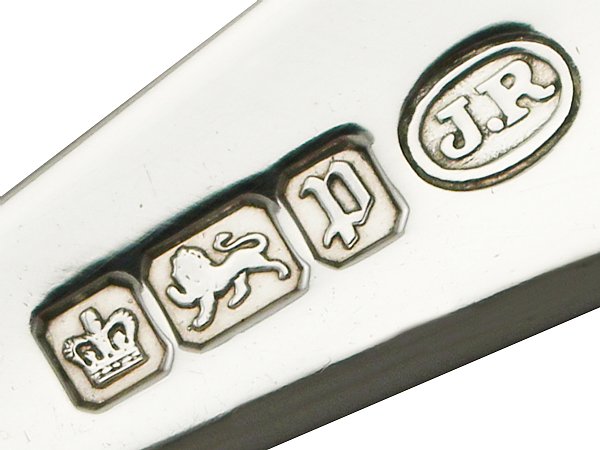
What to look for
How does it work?
Hallmarking is carried out by an independent assay office. When we finish each piece, it is sent for testing by experts who take a minute sample to verify the metal’s composition. Only when it meets the legal fineness standard are a series of official marks applied. These marks usually include:
- The maker’s or sponsor’s mark – a unique stamp identifying our workshop.
- The fineness mark – a number that indicates metal purity (for example, 925 for sterling silver or 750 for 18 ct gold).
- The assay office mark – a symbol showing which assay office tested the piece; in the UK, each office has its own emblem.
- A date letter on antique pieces – used historically to show the year of hallmarking.
While the exact system varies around the world, the principle is the same: an impartial authority verifies the metal and stamps a guarantee of its quality.
Hallmarking Heritage & Our Trusted Partner
Nestled in the heart of England, Sheffield Assay Office has been safeguarding the integrity of precious metals since the 18th century. Every Lynne Lee piece passes through their meticulous hands, where expert assaymasters verify metal purity and apply distinctive hallmarks that date back to ancient legislation protecting consumers. Working with Sheffield means your jewellery carries a mark of authenticity rooted in centuries of craftsmanship and law-making—upholding the same values of quality and trust that underpin our brand.
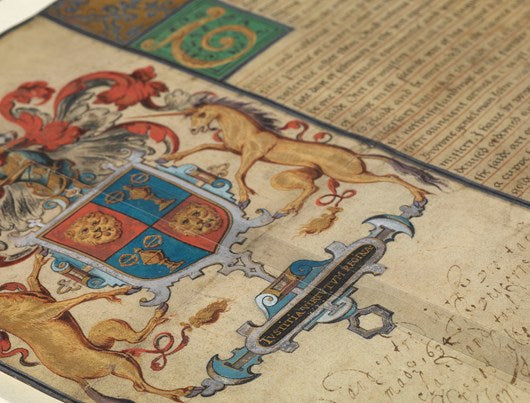
First Hallmarking laws
1300
King Edward I’s statute requires London goldsmiths to have their silver and gold assayed. Wardens of the Goldsmiths’ Company test each piece and stamp it with the leopard’s‑head hallmark—the first legal protection for buyers of precious metals. This early “consumer protection” law ensures metals meet stated purity and lays the foundation for modern hallmarking.

Sheffield Assay Office Founded
1773
The Sheffield Assay Office was founded during Britain’s industrial expansion, becoming one of the country’s historic centres for independently testing and hallmarking precious metals.

Modern Hallmarking Standards
1973
The Hallmarking Act of 1973 modernised the UK’s hallmarking system, bringing greater consistency between the country’s historic assay offices while adapting the centuries-old tradition for modern jewellery manufacturing and international trade. The updated legislation reinforced legal standards for precious metals, expanded hallmarking to include platinum, and helped establish hallmarking as a globally recognised symbol of authenticity, quality and consumer trust that continues today.
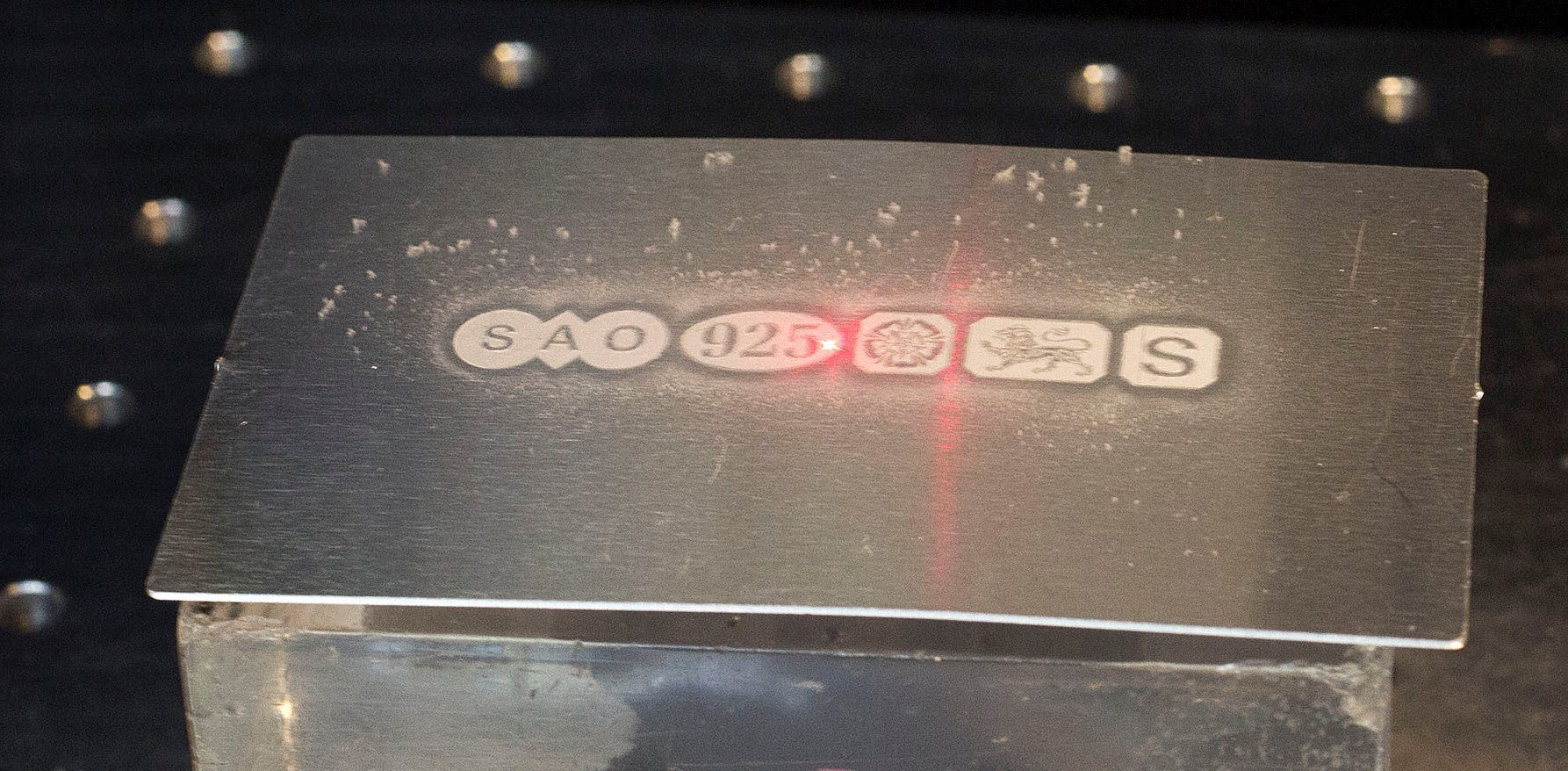
Laser Hallmarking Introduced
Late 1990s
Laser hallmarking begins to modernise the centuries-old process, allowing delicate and highly detailed jewellery pieces to be marked with greater precision while preserving traditional standards of authenticity and purity.

Digital Product Passports
Future
Future developments in jewellery authentication are expected to include Digital Product Passports (DPPs), creating secure digital records that trace a piece’s materials, sourcing, craftsmanship and ownership history — almost like a digital logbook that follows the jewellery throughout its lifetime.
Questions about hallmarking
Order
Hallmark symbols are often placed discreetly on jewellery and can sometimes appear microscopic in size. Depending on the piece, hallmarks may be found inside rings, on clasps, pendant bails or other subtle areas of the design.
A traditional UK hallmark is made up of several symbols that help identify the jewellery and verify its authenticity. Our maker’s mark features two italic “L” letters representing Lynne Lee Jewellery, while the Sheffield Assay Office mark is represented by the historic Yorkshire rose. Alongside these symbols, you may also find a fineness mark such as “925” for sterling silver, indicating the purity of the precious metal used.
In many countries, certain precious metal items are legally required to be hallmarked once they exceed specific weight thresholds. Hallmarking helps protect consumers by independently verifying the authenticity and purity of precious metals such as silver, gold, platinum and palladium.
Smaller or lighter pieces may legally fall below hallmarking thresholds depending on the metal used, however many jewellers still choose to hallmark wherever possible as a mark of quality, transparency and trust.
Hallmarking is a highly specialised process carried out by experienced assay offices using techniques designed specifically for precious jewellery. Traditional hallmarking gently applies marks to the metal, while more delicate or intricate pieces may instead be laser hallmarked to help preserve fine details and sensitive settings.
Whether applied traditionally or by laser, hallmarking is intended to authenticate jewellery while maintaining the integrity and craftsmanship of the piece itself.